
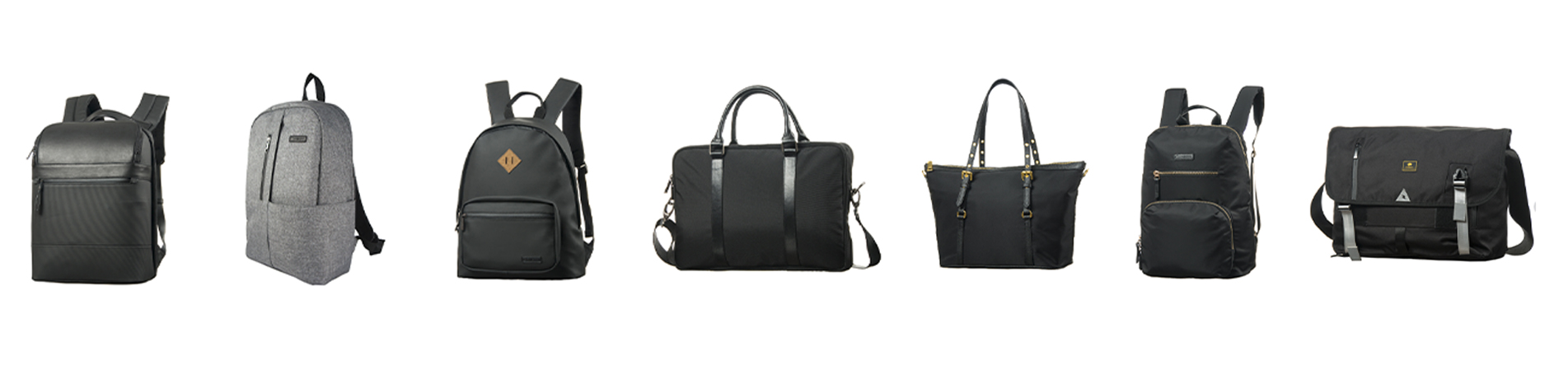
Die Entwicklung von Rucksackrückenpaneelen ist ein systematischer Design- und Entwicklungsprozess, der sich auf die Struktur, die Materialien und das Belüftungssystem des Rückenpaneels konzentriert. Ziel ist es, ein optimales Gleichgewicht zwischen drei wesentlichen Leistungsfaktoren zu erreichen: Stabilität, ergonomische Passform und Atmungsaktivität.
Ein Rucksack mag aus hochwertigen Materialien gefertigt sein, leichtgängige Reißverschlüsse haben und gut aussehen – doch wenn sich das Rückenteil warm anfühlt, steif ist oder am Rücken klebt, werden die meisten ihn wohl kein zweites Mal benutzen. Im Alltag ist das Rückenteil der erste Teil des Rucksacks, den man spürt. Es entscheidet darüber, ob sich der Rucksack leicht oder schwer, atmungsaktiv oder schweißtreibend, stützend oder belastend anfühlt. Deshalb werden manche Rucksäcke für ihren ganztägigen Tragekomfort gelobt, während andere schon nach 20 Minuten zu Schulter- und Rückenschmerzen führen.
Die Entwicklung einer optimalen Rückenplatte ist alles andere als einfach. Eine auf stärkere Unterstützung ausgelegte Rückenplatte ist oft steifer und weniger atmungsaktiv. Wird hingegen die Belüftung priorisiert, kann dies die Stabilität beeinträchtigen und dazu führen, dass sich die Rückenplatte bei längerem Tragen verformt oder gar zusammenfällt. Nur durch die kontinuierliche Optimierung von Konstruktion, Materialkombinationen und Schichtaufbau können Hersteller eine Rückenplatte entwickeln, die ein ausgewogenes Tragegefühl bietet.
Als OEM/ODM-Rucksackhersteller mit über 30 Jahren Erfahrung betrachten wir die Entwicklung von Rückenpaneelen seit jeher als einen der wichtigsten Aspekte der Rucksackentwicklung. Durch die kontinuierliche Optimierung unserer Lösungen hinsichtlich der drei Kernfunktionen – Stützkraft, Atmungsaktivität und ergonomische Passform – unterstützen wir Marken bei der Entwicklung von Rucksäcken, die nachweislichen Komfort, zuverlässige Leistung und durchweg positives Feedback von Nutzern bieten.
Inhaltsverzeichnis
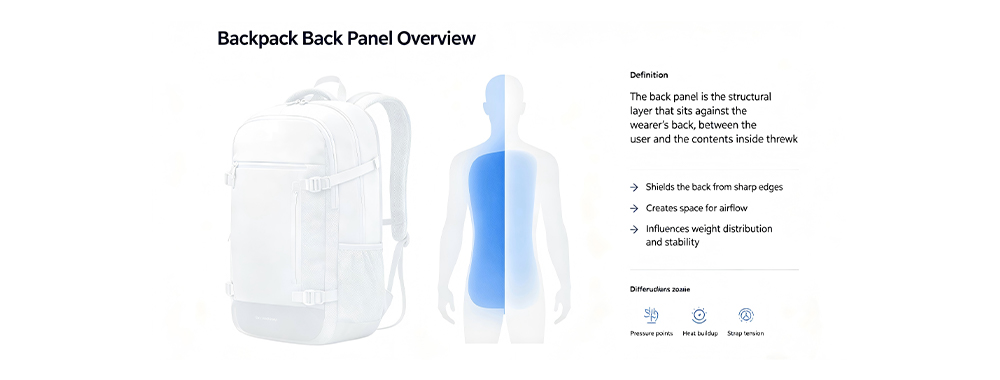
Die Rückenplatte eines Rucksacks ist die tragende Schicht, die am Rücken des Trägers anliegt und sich zwischen dem Träger und dem Inhalt des Rucksacks befindet. Sie bestimmt, wie die Last auf dem Rücken verteilt wird, wie Wärme abgeleitet wird und wie stabil der Rucksack während der Bewegung bleibt.
Ist die Rückenpartie schlecht konstruiert, können scharfe Kanten eines Laptops oder harte Buchecken unangenehm auf den Rücken drücken. Schnell können sich Hitze und Schweiß stauen, wodurch der Rücken heiß und unbequem wird, und die Schultergurte können einschneiden und den Tragekomfort beeinträchtigen.
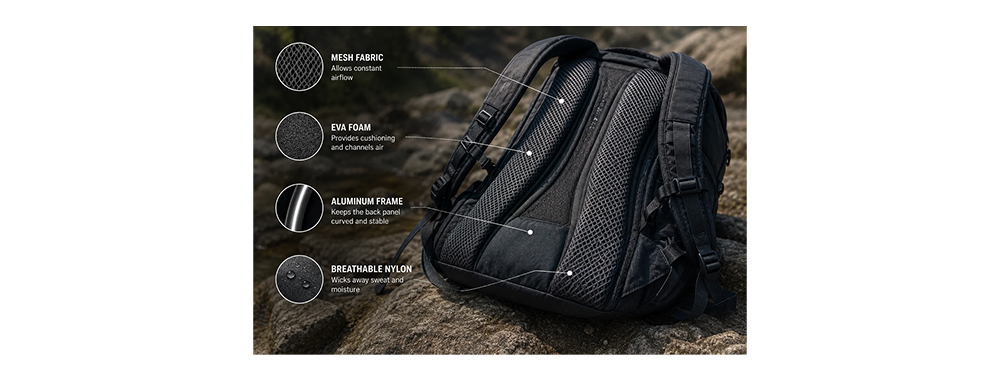
Der menschliche Rücken ist nicht flach. Die Wirbelsäule wölbt sich nach vorn, die Schulterblätter sind nach außen gewölbt und der untere Rücken ist nach innen gekrümmt. Unter Last kann jeder starre Gegenstand im Rucksack – wie beispielsweise die Ecke eines Laptops, der Einband eines Buches oder eine Powerbank – Druckstellen am Rücken des Trägers verursachen.
Die wichtigste Aufgabe bei der Entwicklung eines Rucksackrückenpanels besteht darin, die punktuellen Druckpunkte durch die elastische Verformung der Schaumstoffschichten in einen gleichmäßig verteilten Flächendruck umzuwandeln. Dies verbessert den Tragekomfort deutlich, da die punktuelle Belastung des Rückens reduziert wird.
Ein Schlüsselaspekt ist hierbei die Kompressionskurve des Schaumstoffs. Ein idealer Rückenpolsterschaum sollte bei leichter Belastung weich bleiben und sich angenehm an den Rücken des Benutzers anpassen, bei mittlerer Belastung allmählich fester werden, um strukturelle Unterstützung zu bieten, und auch bei schwerer Belastung ausreichend dick bleiben, ohne durchzudrücken.
Um diese Leistungsfähigkeit zu erreichen, ist in der Regel eine mehrschichtige Schaumstoffkonstruktion erforderlich, anstatt nur ein einzelnes dickes Schaumstoffstück zu verwenden. Ein gängiger Ansatz in der Konstruktion besteht darin, eine äußere Schaumstoffschicht mit geringer Dichte für Weichheit und Komfort mit einer inneren Schaumstoffschicht hoher Dichte für strukturelle Unterstützung zu kombinieren. Dadurch bietet die Rückenlehne sowohl Dämpfung als auch Stabilität unter verschiedenen Belastungsbedingungen.

Das zweite Konstruktionsziel einer Rucksackrückseite ist die Verhinderung von Verdrehungen und Zugkräften nach hinten. Beim Gehen, Drehen oder Treppensteigen erzeugt die Trägheit des Inhalts Bewegungen und Verlagerungskräfte. Ist die Rückenplatte zu weich, neigt der Rucksack dazu, nach hinten und unten durchzuhängen, wodurch die Schultergurte zusätzlich belastet werden und letztendlich Schulterermüdung entsteht.
Eine gut konstruierte Rückenplatte muss ausreichend Stabilität in Längsrichtung aufweisen. Sie sollte in vertikaler Richtung weich und dämpfend bleiben, um Druck abzufangen, während sie in horizontaler Richtung formstabil bleibt und Verformungen widersteht. Diese Balance sorgt für einen stabilen Sitz des Rucksacks am Rücken, minimiert unerwünschte Bewegungen und erhöht den Tragekomfort.
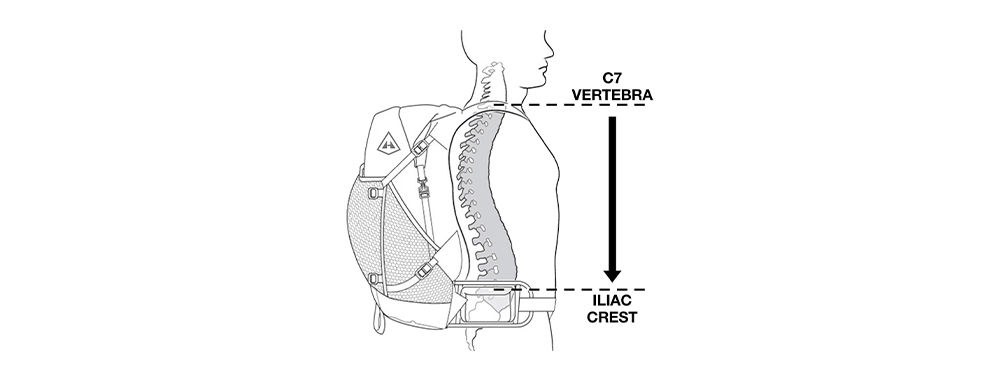
Der Rücken ist eine der wichtigsten Körperregionen zur Wärmeableitung. Wenn die Rückenplatte eines Rucksacks vollständig am Rücken des Trägers anliegt, entsteht ein … Mikroklima An der Kontaktfläche – wo die Temperatur steigt, die Luftfeuchtigkeit gesättigt ist und die Luftzirkulation zum Erliegen kommt – dient ein Luftstromkanal nicht nur dazu, die Rückwand moderner aussehen zu lassen, sondern einen kontinuierlichen Luftaustausch zu gewährleisten.
Luftkanäle weisen jedoch eine kontraintuitive Eigenschaft auf: Die Tiefe ist wichtiger als die Breite. Flache Kanäle (2–3 mm) werden unter Last nahezu vollständig zusammengedrückt und verlieren dadurch ihre Belüftungsfunktion. Im Gegensatz dazu bleiben tiefere Kanäle (5–8 mm) in Kombination mit strukturierten, erhabenen Rippen auch unter hoher Last offen und gewährleisten so einen effektiven Luftstrom.
Dies erklärt, warum sich viele Rucksäcke, die scheinbar über Belüftungskanäle verfügen, bei tatsächlichem Gebrauch dennoch heiß und verschwitzt anfühlen – die Luftkanäle haben aus technischer Sicht versagt.
Wie lassen sich also diese drei technischen Ziele – Unterstützung, ergonomische Passform und Atmungsaktivität – in einem einzigen Rückenteil erreichen?
In den folgenden Abschnitten werden wir die Kernelemente der Rückenplattenkonstruktion Schritt für Schritt erläutern und dabei auf strukturelle Designs, Materialauswahl und die Konstruktion von Luftkanälen eingehen, um Ihnen die technischen Details hinter der Entwicklung einer leistungsstarken Rucksack-Rückenplatte zu verdeutlichen.
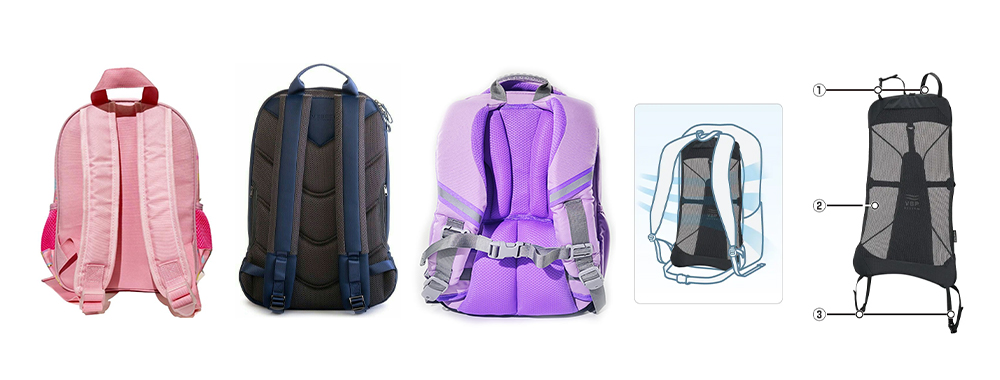
Basierend auf den drei oben genannten technischen Dimensionen lassen sich die auf dem Markt erhältlichen Rucksackrückenplatten im Allgemeinen in vier Strukturtypen einteilen:
Strukturtyp | Kernmerkmale | Druckmanagement | Wärme- und Feuchtigkeitsmanagement | Dynamische Stabilität | Typische Anwendungen |
Flache, gepolsterte Rückenplatte | Einlagiger Schaumstoff mit Stoffauskleidung | Basic | Arm | Schwach | Leichte Rucksäcke, Kinderrucksäcke |
Gerillte Schaumstoff-Rückwand | Geformte oder geschnitzte Lüftungskanäle | Gut | Mäßig | Mäßig | Alltagsrucksäcke, Schultaschen |
Rückwand mit zonierter Unterstützung | Mehrschichtiger Schaumstoff mit zonierter Unterstützung | Exzellent | Gut | Gut | Reiserucksäcke, Laptop-Rucksäcke |
Rückwand mit hängendem Rahmen | Gespanntes Netz mit starrem Rahmen | Gut | Exzellent | Exzellent | Outdoor-Rucksäcke, Wanderrucksäcke |
Auswahlempfehlungen: Teurer ist nicht immer besser – die richtige Wahl hängt vom Verwendungszweck ab.
Im Bereich der Rückwandkonstruktion Bei der Materialauswahl geht es nicht um die Wahl eines einzelnen Materials, sondern um die Entwicklung eines mehrschichtigen Systems, in dem verschiedene Materialien zusammenwirken, um die gewünschte Leistung zu erzielen. Im Folgenden werden die wichtigsten Materialien moderner Rückwandsysteme aufgeführt. und ihren jeweiligen Ingenieursrollen.
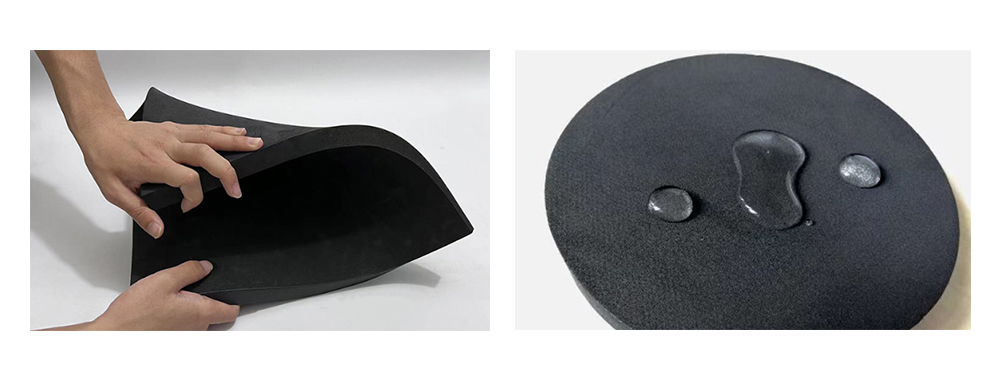
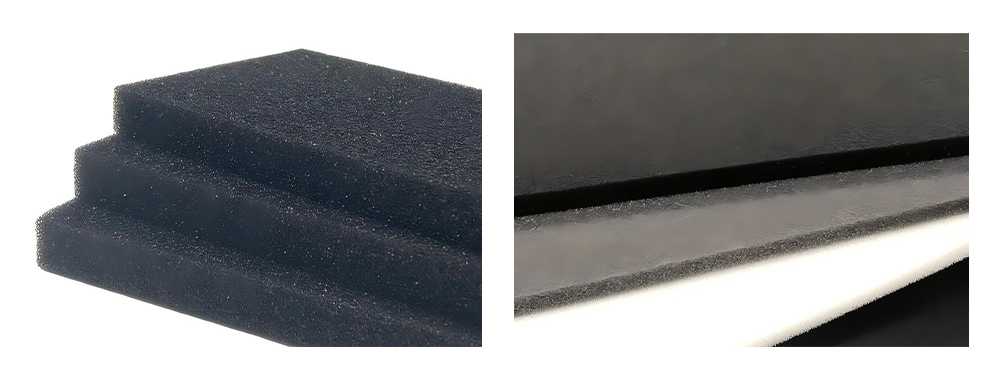
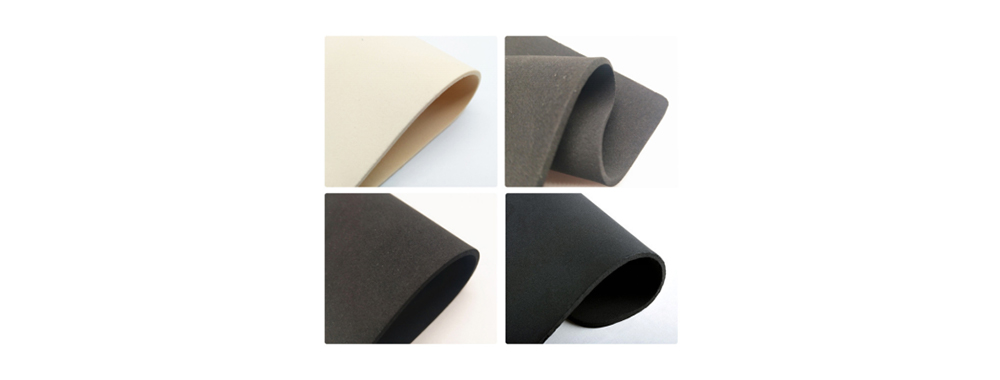
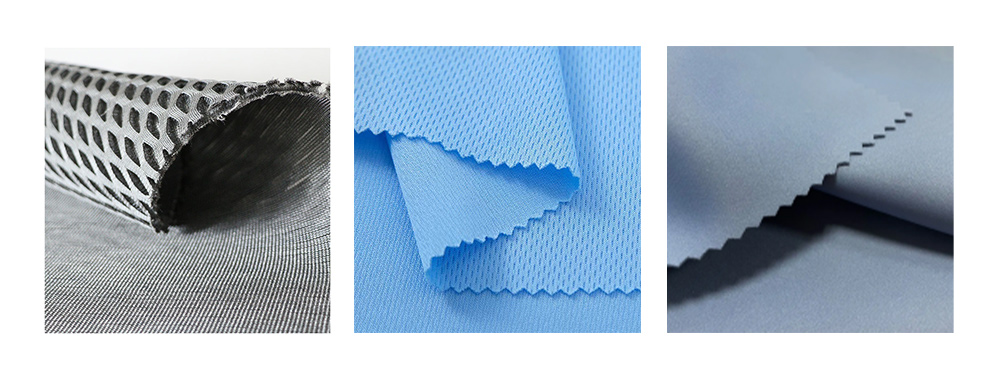
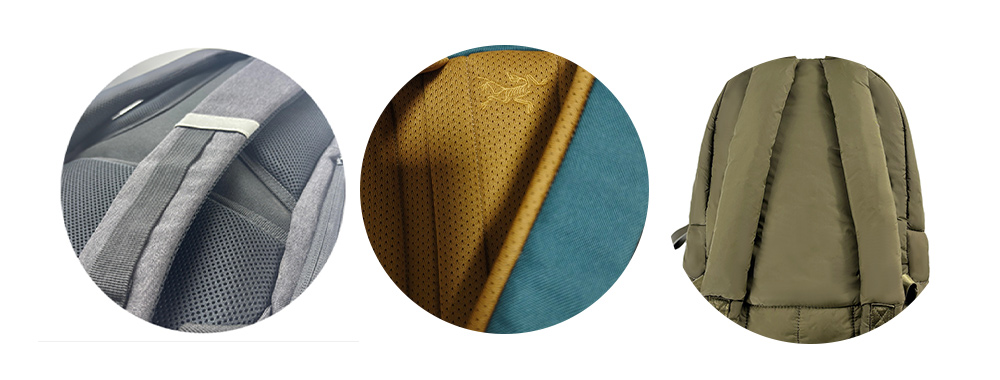
Die Schaumstoffschichten und die Luftkanalstruktur lösen die Probleme der Stützung und Belüftung. Die direkte Schnittstelle zwischen der Rückenplatte des Rucksacks und der Haut des Trägers – die Kontaktschicht—bestimmt, ob Schweiß schnell abtransportiert werden kann, ob die Reibung angenehm bleibt und ob das Material nach längerem Gebrauch Knötchenbildung oder Verformungen entwickelt.
Die Wahl der falschen Kontaktschicht kann alle in den vorangegangenen Phasen geleisteten Entwicklungsarbeiten zunichtemachen.
Materialart | Kernmerkmale | Empfohlenes Gewicht / Dicke | Geeignete Anwendungsbereiche |
3D-Abstandsgewebe (Sandwich-Netzgewebe) | Zwei Lagen Netzgewebe, die durch vertikale Monofilamentstrukturen verbunden sind, sorgen für Feuchtigkeitstransport, Schweißregulierung, Stoßdämpfung und Atmungsaktivität. | 250–700 g/m², Dicke: 2–8 mm | Die bevorzugte universelle Wahl, die mehr als 90 % der Rucksackkategorien abdeckt. |
Vogelaugengewebe / Kettengewirk | Leicht, atmungsaktiv und kostengünstig | 120–180 g/m² | Leichte, lässige Rucksäcke und Taschen, die für den kurzfristigen Sommereinsatz konzipiert sind |
Das gleiche Material wie der Hauptteil des Rucksacks | Schafft einen einheitlichen visuellen Stil und wahrt die Markenidentität | Basierend auf den Spezifikationen des Rucksackkörperstoffs | Modisch orientierte Rucksäcke und Designs, die die ästhetische Gesamtintegration betonen. |
Praktische Empfehlungen:
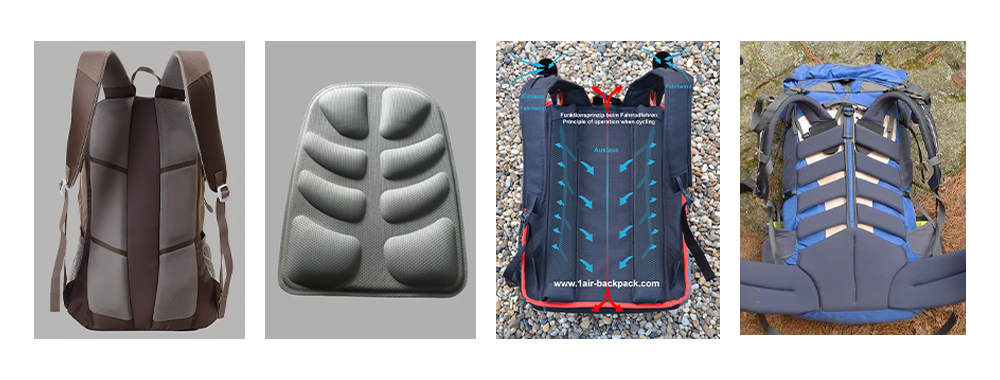
Die Belüftungskanäle sind keine dekorativen Rillen. Es handelt sich um sorgfältig konstruierte Luftstromwege, die die Schweißbildung reduzieren, die Hauttemperatur senken und die Luftzirkulation auch bei schwerer Beladung des Rucksacks aufrechterhalten sollen.
Es gibt zwei Arten von Luftstrommechanismen:
Kanaltyp | Beschreibung | Leistungsniveau |
Vertikale Nuten | Gerade vertikale Luftkanäle | Gut |
Horizontale Nuten | Seitliche Luftströmungswege | Mäßig |
Wirbelsäulenentlastungskanal | Zentraler Spalt zur Druckentlastung entlang der Wirbelsäule. | Sehr gut |
Mehrzonen-Rippenstruktur | Erhöhte Schaumstoffrippen kombiniert mit offenen Belüftungsschlitzen | Exzellent |
Für die meisten kommerziellen OEM-Projekte, ein Entlastungskanal für die Wirbelsäule kombiniert mit seitlichen Luftkanälen kann eine hohe Leistung erbringen, ohne übermäßige Herstellungskosten zu verursachen.
Luftkanäle sind nicht generell besser, wenn sie tiefer sind. Sie müssen eine bestimmte kritische Tiefe überschreiten, um ihre Belüftungsfunktion unter Last aufrechtzuerhalten. Basierend auf Lasttestdaten:
Lastbereich | Minimale effektive Luftkanaltiefe | Empfohlene Luftkanaltiefe |
3–5 kg | 3 mm | 4–5 mm |
5–8 kg | 4 mm | 5–6 mm |
8–12 kg | 5 mm | 6–8 mm |
12 kg+ | 6 mm | 8–12 mm |
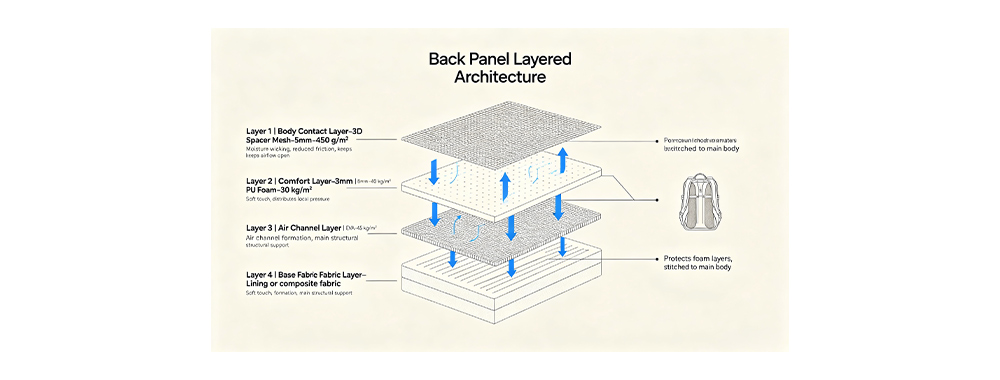
Die Rückenplatte eines speziell entwickelten Rucksacks besteht nicht aus einem einzigen Materialstück, sondern aus mehreren Schichten, in denen verschiedene Komponenten zusammenwirken. Nachfolgend ist der typische Schichtaufbau eines Reiserucksacks dargestellt:
Schicht 1 (Hautkontaktschicht):
3D-Abstandsgewebe, 5 mm Dicke, 450 g/m²
↓ Funktion:
Feuchtigkeitstransport, verringerte Hautreibung und Aufrechterhaltung offener Luftkanäle.
Schicht 2 (Komfortschicht):
3 mm PU-Schaum, Dichte: 30 kg/m³
↓ Funktion:
Bietet ein weiches Tastgefühl und verteilt den Druck lokal.
Schicht 3 (Luftströmungsstrukturschicht):
8 mm EVA, Dichte: 45 kg/m³, mit geformten, erhabenen Rippen und Belüftungskanälen
↓ Funktion:
Schafft Luftstromwege und bietet die primäre strukturelle Unterstützung.
Schicht 4 (Grundschicht der Rückseite):
Futterstoff oder Verbundmaterial
↓ Funktion:
Schützt die Schaumstoffschichten und sorgt durch die Nahtkonstruktion für eine stabile Verbindung mit dem Hauptteil des Rucksacks.
Erfahrungsaustausch in der Fertigung:
Mehrschichtige Konstruktionen sind nicht einfach nur das nacheinander Verkleben verschiedener Materialien. Der Laminierungsprozess zwischen den einzelnen Schichten beeinflusst das Tragegefühl unmittelbar.
Bei Rückenpolstern mit mehrzoniger Unterstützung muss die Positionierung und Ausrichtung der Schaumstoffkomponenten unterschiedlicher Dichte im Vorfeld sorgfältig kontrolliert werden. Dies beugt Verschiebungen und Verformungen nach dem Formen vor und gewährleistet, dass jede Stützzone exakt den verschiedenen Druckverteilungsbereichen des menschlichen Rückens entspricht.
Prüfen Sie, ob die Härte und Dicke des Schaumstoffs innerhalb von ±5 % der vorgegebenen Zielwerte liegen, um die Übereinstimmung mit den Konstruktionsanforderungen sicherzustellen.
Prüfen Sie die Luftkanaltiefe im unbelasteten Zustand, um die Formgleichmäßigkeit sicherzustellen. Führen Sie anschließend eine Belastungsprüfung durch, um die effektive Arbeitstiefe unter Druck zu messen und sicherzustellen, dass die Kanäle die erforderliche Mindesteffektivtiefe gemäß den Leistungsstandards beibehalten.
In der Musterfreigabephase sollten Rucksäcke von Nutzern mit unterschiedlichen Körperformen und realistischer Beladung getestet werden. Ziel ist es, alltägliche Nutzungsszenarien zu simulieren und potenzielle Probleme wie punktuelle Druckstellen, konzentrierten Tragekomfort oder eine unzureichende Passform zu identifizieren.
Sollten Komfort- oder Leistungsprobleme auftreten, sind umgehend Anpassungen an der Schaumstoffdichteverteilung oder der Konstruktion vorzunehmen. Erst wenn das freigegebene Muster die Konstruktionsanforderungen vollständig erfüllt, darf das Produkt in Serienproduktion gehen.

Während der Serienproduktion müssen alle Parameter, die während der Vorproduktionsmusterfreigabephase bestätigt wurden, strikt eingehalten werden. Zur Sicherstellung einer gleichbleibenden Qualität werden Chargenkontrollen durchgeführt.
Bei jeder eingehenden Charge Schaumstoffmaterialien müssen Härte und Dicke geprüft werden, um eine gleichbleibende Qualität zu gewährleisten. Dadurch werden Qualitätsschwankungen in der Serienproduktion aufgrund von Unterschieden zwischen den Materialchargen vermieden. Die Materialien der Kontaktschicht sollten zudem stichprobenartig auf Gewicht und Dicke geprüft werden, um sicherzustellen, dass sie die geforderten Spezifikationen erfüllen.
Die Hersteller sind verpflichtet, während der gesamten Produktion vollständige Prozessinspektionen durchzuführen, um sicherzustellen, dass jeder Fertigungsschritt den festgelegten Prozessanforderungen entspricht.
Gemäß dem AQL-Standard 1.5/4.0 werden Stichproben aus fertig genähten Rucksäcken nach dem Zufallsprinzip für eine Sicht- und Funktionsprüfung ausgewählt, einschließlich:
Darüber hinaus sollten an ausgewählten Mustern Belastungsversuche durchgeführt werden, um sicherzustellen, dass die Rückwand unter Langzeitbelastung keine signifikanten Einstürze, Leistungseinbußen oder andere strukturelle Mängel aufweist. Dies trägt dazu bei, dass fehlerhafte Produkte nicht in den Markt gelangen.

Parameterkategorie | Spezielle Artikel |
Schaumstoffspezifikationen | Materialart, Dicke, Dichte, Härte, Farbe |
Luftkanalspezifikationen | Layoutmuster, Tiefe, Breite, Abstand der erhabenen Rippen, Formgebungsverfahren |
Maschenspezifikationen | Dicke, Gewicht (g/m²), Faserzusammensetzung, Farbe, ob eine Anti-Pilling-Behandlung angewendet wurde |
Laminierungsprozess | Verbindungsmethode, Klebstoffart |
SYNBERRY ist spezialisiert auf die systematische Forschung und Entwicklung von Rückenplatten für Rucksäcke. Dank unserer über 30-jährigen Erfahrung in der Rucksackherstellung bieten wir Markenherstellern mit unterschiedlichen Positionierungen und Anwendungsbereichen umfassende technische Unterstützung während des gesamten Entwicklungsprozesses.
Falls Sie individuelle Wünsche bezüglich der Rückenpartie Ihres Rucksacks haben, zögern Sie bitte nicht, uns zu kontaktieren. Kontaktieren Sie uns Sie können uns jederzeit kontaktieren, um die Details Ihres konkreten Projekts zu besprechen.
Frage 1: Führt eine dickere Schaumstoffpolsterung der Rückenpartie immer zu höherem Komfort?
A: Nicht unbedingt. Zu dicker Schaumstoff kann das Gewicht und das Volumen des Rucksacks erhöhen, und wenn die Schaumstoffdichte nicht optimal abgestimmt ist, kann dickerer Schaumstoff sogar eher zum Zusammenfallen neigen. Entscheidend ist die abgestimmte Gestaltung von Schaumstoffdicke, -dichte und Belüftungskanälen.
Frage 2: Warum fühlt sich das Testmodell beim Tragen angenehm an, die in Serie gefertigten Rucksäcke hingegen sind zu steif?
A: Die häufigsten Ursachen sind Schwankungen in der Schaumstoffhärte oder Unregelmäßigkeiten im Laminierprozess. Es ist wichtig, sicherzustellen, dass die Schaumstoffhärte innerhalb des vorgegebenen Toleranzbereichs bleibt und während der Freigabephase der Vorserienmuster Druckprüfungen durchzuführen.
Frage 3: Sind Neopren-Rückenpaneele für den Sommereinsatz geeignet?
A: Reine, flache Neopren-Rückenplatten sind für den Sommer nicht ideal, da Neopren naturgemäß Wärme speichert. In Kombination mit einer EVA-Stützschicht, atmungsaktiven Luftkanälen und 3D-Mesh können Neopren-Rückenplatten jedoch auch bei sommerlichen Bedingungen für ein angenehmes Tragegefühl sorgen.
Frage 4: Wie tief müssen die Luftkanäle sein, um effektiv zu funktionieren?
A: Für Rucksäcke für den täglichen Gebrauch (5–8 kg Zuladung) wird eine Tiefe von 5–6 mm empfohlen. Für Reiserucksäcke (8–12 kg Zuladung) werden 6–8 mm empfohlen. Für Outdoor-Rucksäcke (ab 12 kg Zuladung) werden 8–12 mm empfohlen.
Die wichtigste Voraussetzung ist, dass nach der Belastungsprüfung die verbleibende effektive Luftkanaltiefe nicht weniger als 70 % der ursprünglichen Tiefe betragen darf.
Frage 5: Wie sollte das GSM des 3D-Netzes ausgewählt werden?
A:
Ein Netzmaterial mit unzureichendem Gewicht kann sich mit der Zeit dehnen und verformen, wodurch die Luftkanäle bei längerem Gebrauch an Wirksamkeit verlieren.
Frage 6: In welchem Maße beeinflusst die Gestaltung der Rückenplatte die Gesamtkosten des Rucksacks?
A: Das wirkt sich natürlich auf die Kosten aus. Durch die Optimierung der Luftkanaltiefe und der Konstruktion anstatt durch eine einfache Erhöhung der Materialstärke können Hersteller jedoch deutliche Verbesserungen des Tragekomforts erzielen und gleichzeitig die Kosten im Rahmen halten.
| Autor | ||||||
|
Bitte lesen Sie weiter, bleiben Sie auf dem Laufenden, abonnieren Sie uns und wir heißen Sie herzlich willkommen, uns Ihre Meinung mitzuteilen.




Copyright
@2024 Synberry Bag & Package Products Co.,Ltd Alle Rechte vorbehalten
.
 NETZWERK UNTERSTÜTZT
Sitemap / Blog / Xml / Datenschutzrichtlinie