
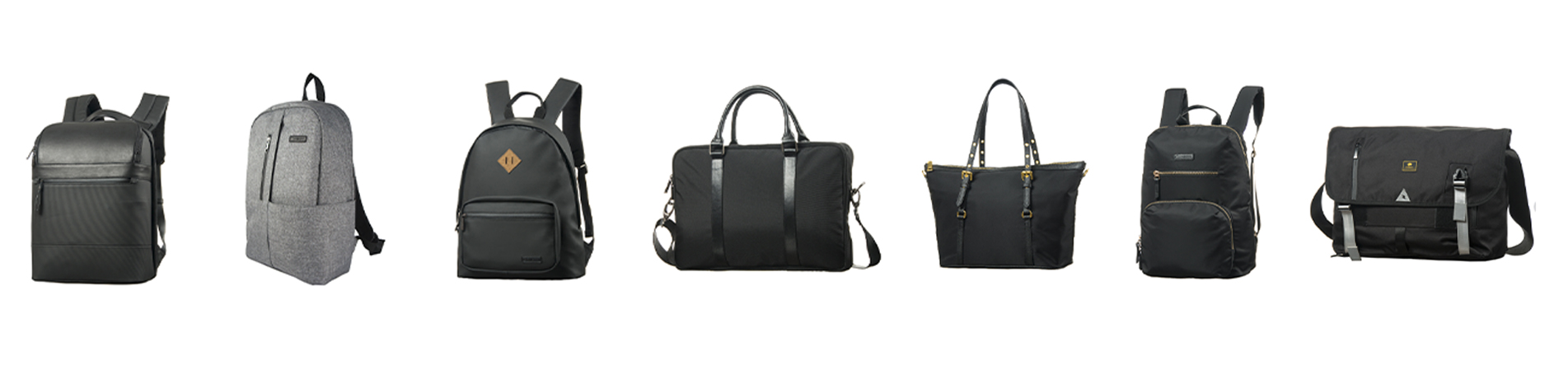
Bar tack stitching, also known as tack stitching or bartacking, is a reinforcement technique that uses dense back-and-forth stitching at stress points to create a highly secure locking stitch structure. It acts as a reinforced locking point for every major load-bearing area of a backpack.
Standard lockstitch seams mainly provide basic assembly. When a backpack carries weight, pulling forces concentrate along individual stitch lines, eventually causing seam failure, delamination, or tearing. Bar tack reinforcement distributes these forces through dense stitch patterns and firmly secures the joining areas, providing 3–5 times higher tensile strength than standard stitching.
Many customers wonder why backpacks made with the same materials and thickness can have completely different service lives. Some lose shoulder straps or develop torn corners after only six months, while others remain durable for years.
The difference is not only the fabric — it lies in the bar tack reinforcement process.
For backpack OEM projects, understanding bar tack reinforcement is not only essential for quality control but also a fundamental factor in product durability and brand reputation. This guide explains the load distribution logic, critical reinforcement locations, and proper bartacking methods for different backpack components.
Ⅰ. Why Do Backpacks Require Bar Tack Reinforcement?
Ⅱ. Three Main Sources of Backpack Stress
Ⅲ. Common Backpack Bar Tack Reinforcement Areas
Ⅳ. Four Key Principles of Proper Bar Tack Execution
Ⅴ. Bar Tack Configurations for Different Backpack Applications
Ⅵ. FAQ
Ⅶ. Conclusion
Standard lockstitch seams create a straight stitching line. Once a backpack is loaded, gravity, movement, and twisting forces are concentrated on this single line, causing repeated stress that eventually leads to loose threads, broken seams, and fabric separation.
The purpose of bar tack stitching is simple: distribute concentrated tension across a larger stitched area and lock the connection point securely through dense repeated stitching.
Standard stitching = basic joining.
Bar tack reinforcement = structural locking.
Properly applied bartacking can achieve 3–5 times the tensile strength of standard stitching based on ASTM D5034 breaking strength comparison testing, greatly reducing the risk of tearing, cracking, and seam failure.
Backpack damage usually comes from three types of forces:
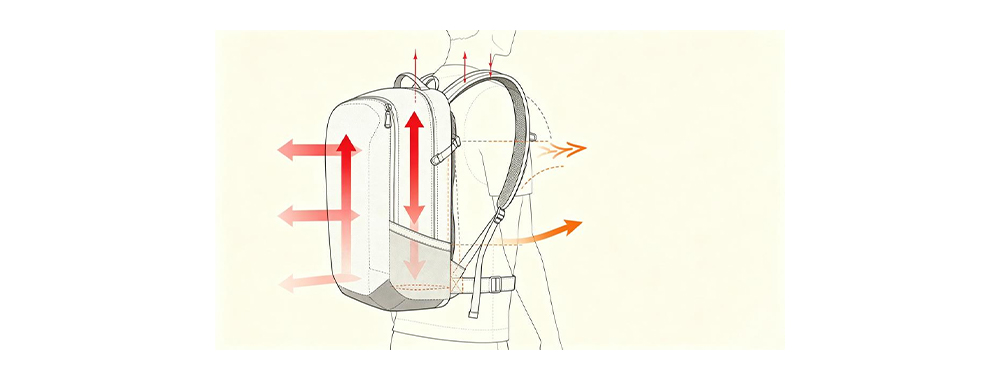
When carrying heavy items, gravity pulls downward vertically. The stress concentrates around shoulder strap anchors and hip belt attachment points, which are the main causes of shoulder strap failure.
During walking, running, or climbing, backpacks experience vertical bouncing, lateral pulling, and twisting movements. Instant dynamic forces can reach 2–3 times the static load. Areas such as corners, handle bases, attachment points, and zipper ends are repeatedly stressed and may fail without proper reinforcement.
Corners, webbing edges, and seams constantly rub against clothing, walls, and surfaces. Over time, stitches loosen and wear down, eventually causing fraying, thread separation, and small tears. Preventive bartacking helps reduce these hidden risks.
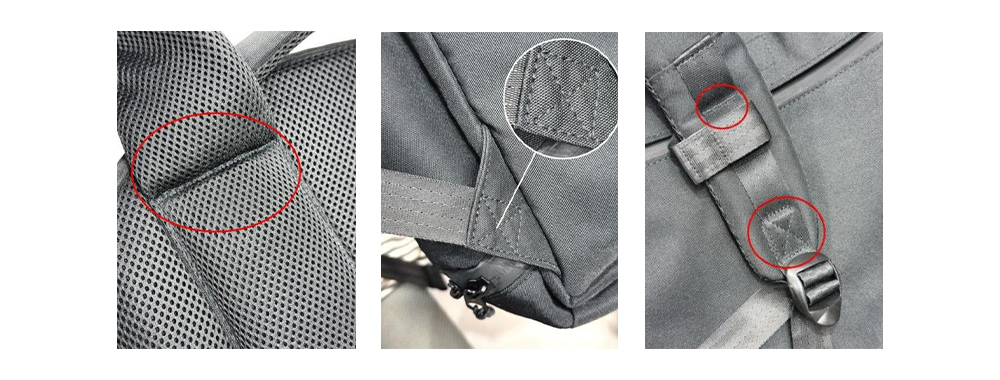
Bar tack stitching is a critical reinforcement process in bag manufacturing. By creating dense repeated stitches at high-stress locations, it forms reinforced zones that prevent tearing.
As a backpack factory with 30 years of manufacturing experience, we classify common bartacking locations according to functional areas:
| Location | Bar Tack Position | Functional Purpose |
| Shoulder strap root | Junction where shoulder straps attach to upper back panel of backpack body | Bears total pack weight; mandatory bar tack zone |
| Lower shoulder strap end | Connection between bottom/side gusset and shoulder strap base | Prevent strap pull out from lower attachment |
| Strap adjuster anchorage | Sewing joints for slide buckles and ladder lock buckles to webbing | Resist frequent cyclic pulling; prevent buckle detachment |
| Location Bar | Tack Position | Functional Purpose |
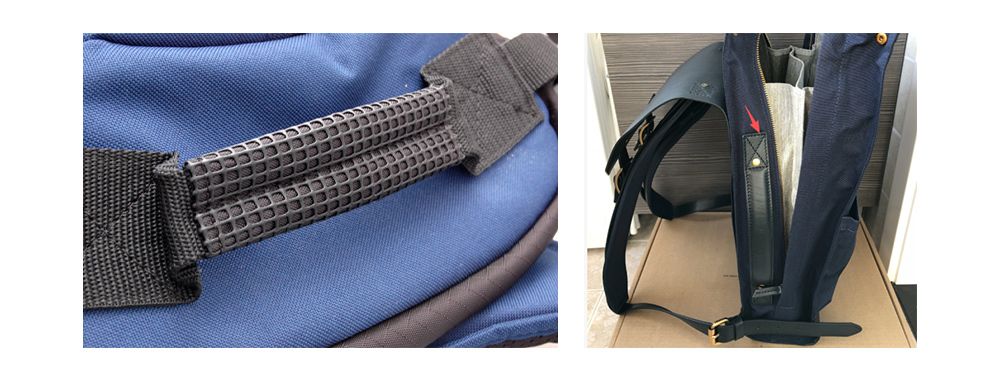
| Top carry handle root | Sewing joints between handle webbing and top lid/rear panel | Absorb concentrated force during manual lifting |
| Side / vertical carry handles | Connection points of side mounted handles to main body | Resist vertical tension; avoid side panel tearing |
| Location Bar | Tack Position | Functional Purpose |
| Hip belt anchor points | Sewing joints between hip belt buckles and hip belt webbing | High stress zones during load weight transfer |
| Chest stabilizer strap | Attachment joints of chest strap buckles to shoulder straps | Withstand frequent dynamic pulling during movement |
| Back panel mounting points | Sewing interfaces between back panel frame and main backpack body | Structural joint reinforcement |
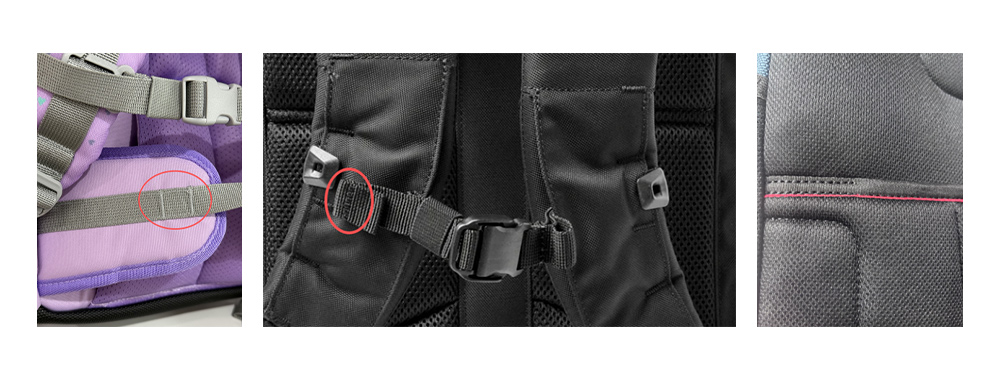
| Location Tack | Tack Position | Functional Purpose |
| Zipper head end | Origin end of zipper track (slider rest position) | Prevent zipper slider from pulling out of track channels |
| Zipper tail end | Terminal stop end of zipper assembly | Avoid zipper track separation and blow out at tail stop |
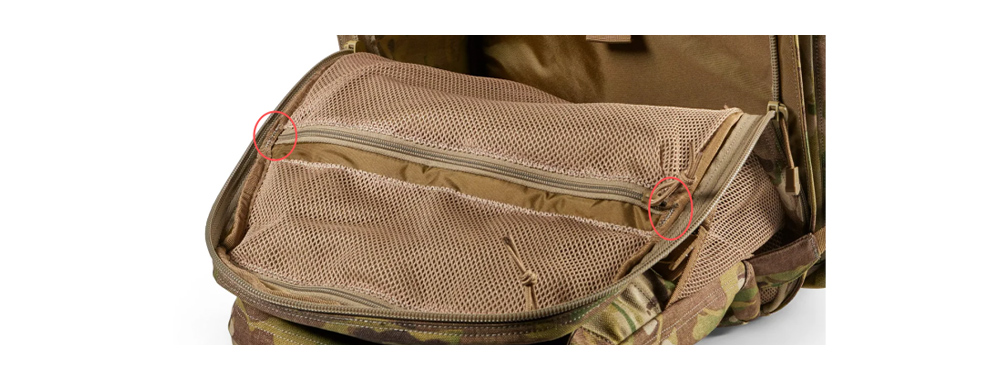
| Location | Bar Tack Position | Functional Purpose |
| Buckle attachment joints | Sew in anchor points for buckles onto pack body | Primary load bearing points for externally hung accessories |
| Webbing loops / daisy chains | External daisy chain webbing mounted on shoulder straps | Individual bar tack for each loop to guarantee independent load bearing capacity |
| Side compression strap anchorages | Sewing joints for side compression straps to main body | Counteract transverse tension generated during strap tightening |
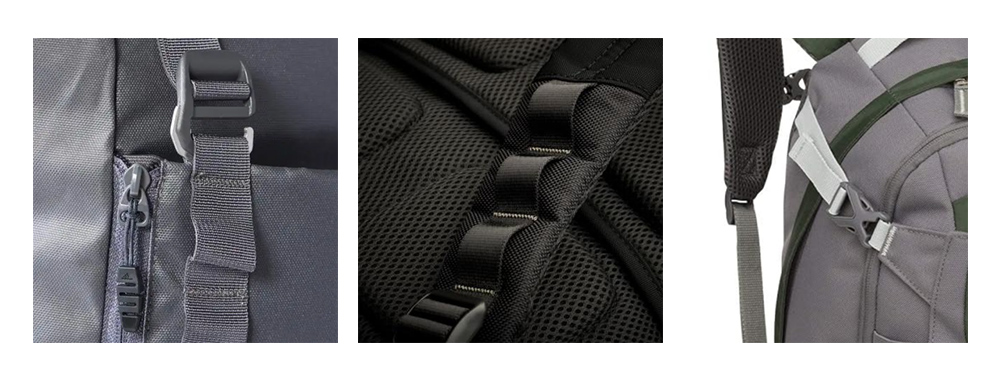
| Location Bar Tack | Position | Functional Purpose |
| Hydration tube port / earphone cable port | Perimeter reinforced stitching around cut out openings | Prevent progressive tearing and enlargement of apertures in service |
| Reflective strips / brand logo patches | End anchorage stitching for decorative trims onto pack body | Resist pull off forces acting on decorative components |
| Internal hanging points / key leash anchorages | Sew in joints for key hook webbing | Avoid detachment caused by weight of carried keys |
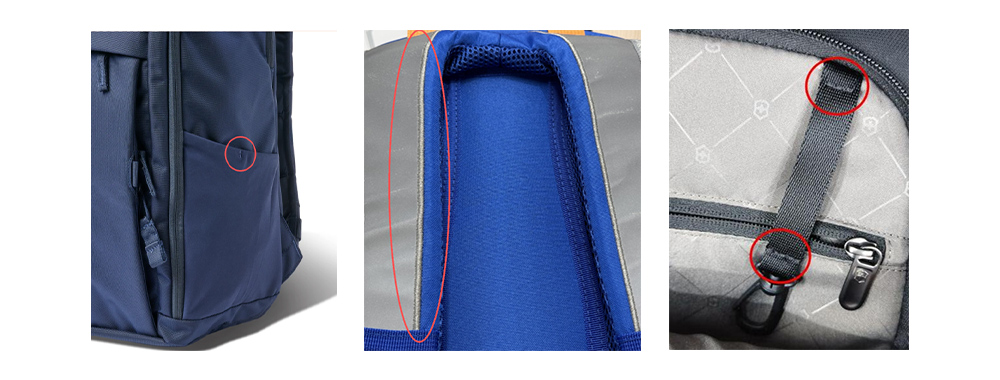
Standard compliant bar tack stitching must follow four key principles:
Bar tacks must accurately cover the joining area between webbing and fabric. Misalignment reduces reinforcement effectiveness and wastes production effort.
High-load areas require denser and larger reinforcement, while low-stress areas need lighter reinforcement. This balances durability, weight, and production efficiency.
Heavy fabrics and load-bearing backpacks usually require high-strength polyester thread (minimum No. 40 recommended). Lightweight products should use suitable medium-weight threads. Threads that are too thin may break easily, while overly thick threads can damage fabric or create wrinkles.
Corresponding left and right reinforcement points must maintain consistent construction. Uneven reinforcement can cause unbalanced loading, deformation, and premature wear.
Focus reinforcement on shoulder strap anchors, attachment points, and bottom areas. Secondary areas can use simplified construction to balance lightweight design, durability, and cost.
All major load-bearing points should use premium double bartacking. Bottom panels and external attachment areas require reinforced density to withstand long-term heavy loads, rough terrain, and impact.
All external webbing, loops, and attachment points require enhanced reinforcement. Frequently used functional areas should receive additional bartacking for accessory mounting and high-intensity applications.
No. Excessive bartacking can make fabric areas unnecessarily thick and stiff while increasing weight and cost. The correct approach is graded reinforcement: dense reinforcement for high-stress areas and lighter reinforcement for low-stress areas.
Polyester thread offers UV resistance and excellent aging performance, making it the mainstream choice for outdoor and commuter backpacks. Nylon thread provides greater elasticity and impact resistance but costs more, making it suitable for tactical and extreme-load applications.
Check three points:
1. Whether shoulder strap connections use box-X or double reinforcement bartacking.
2. Whether webbing is embedded into the fabric layers before bartacking instead of simply stitched onto the surface.
3. Whether symmetrical reinforcement points are consistent and free from cost-cutting practices.
It can provide partial repair, but it cannot fully restore original factory strength if the webbing or fabric has already been damaged. The most reliable solution is proper reinforcement during initial production.
Yes, but with a different approach. Ultralight backpacks should use smaller, lightweight bartacks at critical stress points to maintain tear resistance without compromising fabric flexibility or weight control.
The principle of bar tack reinforcement is simple: reinforce where stress is highest, and lock edges precisely where wear occurs.
As an OEM/ODM manufacturer specializing in customized bag solutions, Synberry develops reinforcement structures based on real-world load conditions. We avoid unnecessary process complexity while maintaining essential reinforcement standards.
For commuter, outdoor, and tactical backpacks, we provide customized bartacking solutions covering reinforcement placement, stitch specifications, and quality control standards, meeting global premium manufacturing requirements.
If you require backpack customization, manufacturing upgrades, pattern optimization, or sampling and mass production services, contact Synberry. We provide tailored reinforcement solutions based on product positioning, application scenarios, and budget, controlling every stress point to improve durability, reduce after-sales issues, and strengthen product competitiveness in global markets.
| Author | ||||||
|
Bitte lesen Sie weiter, bleiben Sie auf dem Laufenden, abonnieren Sie uns und wir heißen Sie herzlich willkommen, uns Ihre Meinung mitzuteilen.




Copyright
@2024 Synberry Bag & Package Products Co.,Ltd Alle Rechte vorbehalten
.
 NETZWERK UNTERSTÜTZT
Sitemap / Blog / Xml / Datenschutzrichtlinie